
Tested before it's built
Virtual analysis lets us check a product before it exists: where the stresses are highest and how the shape changes under load. We build the finite element mesh and the numerical model ourselves, because the quality of the result depends on exactly that.
The quality of the result depends on the mesh and the numerical model – so we build them ourselves.
Four steps
1 · Product in use
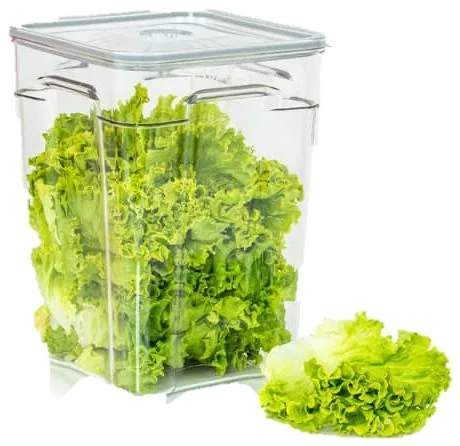
The starting point is the product as the user knows it: a 10-litre gastro vacuum container.
2 · 3D model
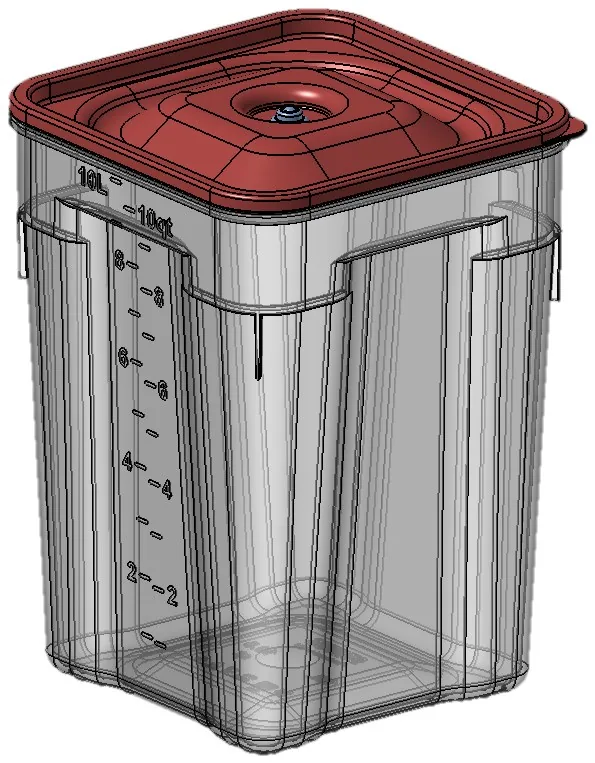
We build the container as a parametric CAD model – the dimensions are linked, so every change of shape is quick and consistent across the whole model.
3 · Mesh
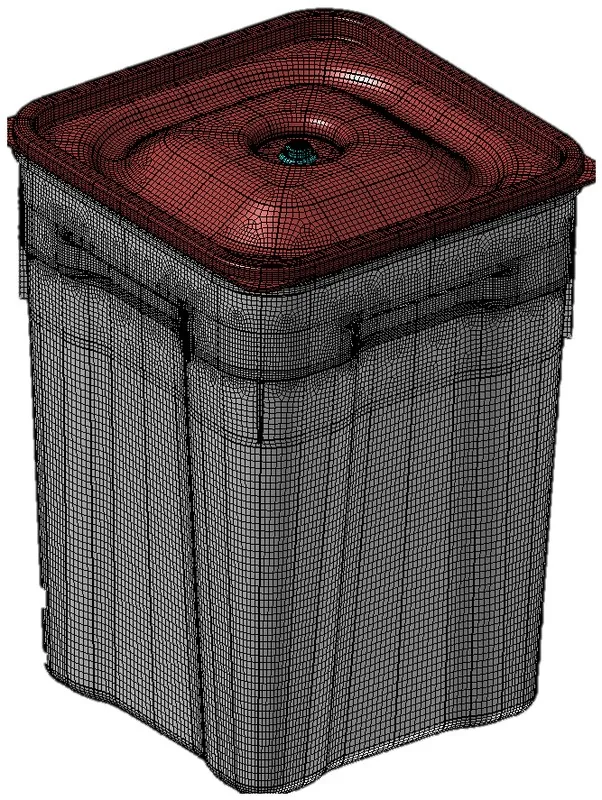
We divide the model into a finite element mesh and prepare it for simulation.
4 · Analysis
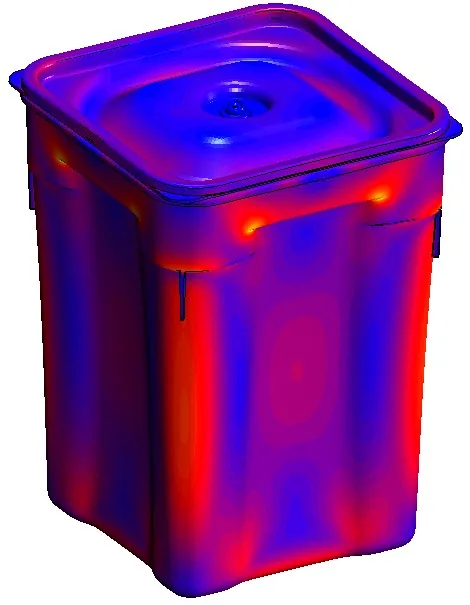
The colour plot shows the container's stress and deformation under load – where the material is loaded most and how the shape changes.
The analyses we run
Our experience comes from virtual evaluation in the automotive industry.
- Elasto-plastic analyses with contacts – stiffness, static loads below the yield point, plastic material properties
- Welding simulation – assembly distortion and residual stresses
- Heat transfer and thermal stresses – how heat affects the stress and strain state
- Fatigue life prediction – dynamically loaded components and welds, most often the critical spot
- Crashes and large deformations – products subject to impacts and large deformations